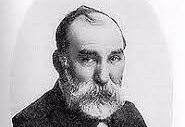
Today I want to share with you the remarkable story of major Daniel Whittle. The life of this man is an example of the power of scripture, Christian history, and church hymnody. Join me now as I introduce you to a remarkable man.
The young man braced himself for the chaos and confusion that engulfed him. His quiet upbringing in Massachusetts and early career in Chicago hadn’t prepared him for the bullets flying his way, striking his friends, and threatening his life in Mississippi. With astonishing courage, he charged ahead until a sharp pain tore into his arm. A bullet from a Confederate rifle had struck him, and Daniel Webster Whittle was numbered among the wounded at the Battle of Vicksburg on May 22, 1863.
Who could have imagined that he would later become one of the most beloved of American hymn writers?
Let’s get to know him.
Daniel Whittle was born in Massachusetts on November 22, 1840, and named for the American statesman, Daniel Webster. At age 17, he joined others who were leaving the Eastern states for the Midwest. He was not a Christian, but the Lord was working in his heart.
He later wrote, “I came to Chicago April 1, 1857…. I met on the first Sunday I was in the city, two men…. One was the superintendent of the First Baptist Sunday School, and the other the teacher of a young men’s Bible class which I joined a few weeks later…. I was then unconverted.”
He later how he gave himself to Christ in 1860, when about nineteen years old. According to one account that I cannot totally verify, Whittle said, “I went into the [bank] vault and in the dead silence of that quietest of places I gave my life to my Heavenly Father to use as He would.”
Daniel quickly became involved in the newly-formed Young Men’s Christian Association and in the Sunday School work with children at the Tabernacle Sunday School. But the Civil War interrupted his life.
He wrote, “We organized as the Seventy-second Illinois Infantry, and hurried to the front. Many of the men in our regiment were Christians; many became Christians during their army life.”
According to research done by David Russell Hamrick, The Chicago Tribune announced the death of Daniel Whittle’s friend, Daniel W. Farnham, who died during the Battle of Shiloh. That may have motivated Whittle to organize his friends to join the Union Army. The Tribune reported, “The members of the Chicago Literary Union, to which society the deceased belonged, are requested to call upon D. W. Whittle at office of the American Express Company, to make arrangements for bringing the remains of Mr. Farnham to Chicago for interment” (Chicago Tribune 15 April 1862 page 472).
Farnham wrote, “On July 16, Whittle was at a meeting of the Union Defense Committee, representing young men of the city interested in forming a regiment. Whittle’s group set an organization meeting for 18 July at Bryan Hall, where the Y.M.C.A. met. By 8 August 1862 this drive had led to the formation of six companies, one of which was Whittle’s (at that date he had registered 62 recruits).”
The regiment mustered in August 20, 1862.
At this very time, Daniel Whittle had fallen in love with Abbie Hanson, whom he had met at the Tabernacle Sunday School in Chicago. They were married on August 22, 1862—the night before Whittle’s regiment departed for the South.
On May 22, 1863, the 72nd Illinois took part in the disastrous Union assault against the Confederate defenses at Vicksburg and suffered terrible casualties. According to one source, Daniel “moved up to the assault with a smile, saying, ‘Come on, my brave fellows, rebel bullets cannot hit us.”
But Daniel was shot in the arm. He was sent home to Chicago to recover, but was back with his regiment at Vicksburg on June 16. The Chicago Tribune carried this item: “Lieut. Whittle… will return to his regiment, on Tuesday, next, and will take with him any letters addressed to that regiment, if left at the American Express Office by next Monday.”
Apparently, while recovering back in Chicago, Whittle encountered evangelist Dwight L. Moody. At the time, Daniel was “still weak from loss of blood with my arm in a sling.”
This visit with Moody laid the foundation for the rest of his life. Dr. A. T. Pierson, who was a friend of Daniel, quoted his own words about this:
In 1863, I was in Chicago, home on a brief furlough with a wound received at Vicksburg. There was a great [Christian gathering] at that time, and… I was brought to the platform, and I never felt so foolish in my life as in being there. The friends received me kindly, because of the patriotism and the love which they felt for the soldiers.
Mr. Moody was in the audience, and as I stood on the platform he rose to his feet and waved his hat, with that face of his all lit up. I told him afterwards how foolish I felt, and he said to me, “Whittle, I took you into my heart that night, and you have never been out of it since.”
Though back with his men, Daniel was still unfit for combat. So he must have spent time praying with wounded and dying soldiers. When the chaplain for their regiment resigned Whittle and others organized a Y.M.C.A. chapter to care for the spiritual needs of the soldiers.
Soon Daniel was assigned to help process Confederate prisoners of war, and later appointed to the staff of General Oliver Otis Howard, who was known as the “Christian General” because of his outspoken commitment to Christ and the integrity of his character.
Daniel was mustered out of the army on August 7, 1865, as a captain in the 72nd Illinois Infantry. On October 14 he was awarded the honorary brevet rank of major for “faithful and meritorious service,” and for the rest of his life he was commonly known as Major Whittle.
Returning to Chicago, Daniel found a job at the Elgin Watch Company. He and Abbie welcomed a son into their home, Charles, in 1866. Four years later, in 1870, Mary Jennette, was born who became known as May. She later studied at Oberlin College and at the Royal Academy of Music in London, and she became a singer, organist, and hymn editor. She is the composer who provided the melody for her father’s hymn, “Moment by Moment.” She later married D. L. Moody’s son, William Revell Moody, and she lived until 1963, passing away at age 93.
These were the great days of urban evangelism and revival, much of it centered around evangelist Dwight L. Moody, and it was under Moody’s influence that Whittle became a traveling evangelist. Whittle said:
One night, in the city of Chicago, I received my ordination. Mr. Moody was the Bishop who ordained me. We stood under a lamp post as we were walking home. We were talking about the work, what ought to be done, and what could be done. In that earnest, simple, direct way of his, he pulled out his Bible, and put his finger on 2 Timothy 4:1-2, and he said, “See here, Whittle, this is what God wants us to do—preach the Word.”
In 1874, Whittle teamed up with Philip Bliss, and the two men traveled around the country, with Whittle preaching and Bliss leading the music.
One campaign targeted Detroit, and Whittle and Bliss stayed with pastor Arthur T. Pierson, who would later become a renowned global Bible teacher. During that time, Whittle and Bliss apparently saw something in Pierson’s life that was keeping him from a more successful ministry. Pierson later wrote, “On the day they left, Mr. Whittle frankly said to me, ‘Bliss and I both feel that, if you were fully consecrated to God, He would use you remarkably for His glory, and we have both covenanted to pray for you daily.”
Whittle and Bliss worked together for nearly three years until the tragic day, December 29, 1876, when Philip Bliss and his wife perished in the Ashtabula, Ohio, train wreck. Afterward, Whittle worked alongside a new song leader, James McGranahan.
The way the Whittle / McGranahan association came about was providential. Before his death, Philip Bliss had told Major Whittle that he had a musician friend, James McGranahan, who was looking to team up with an evangelist with whom he could lead citywide campaigns.
When news spread of the Ashtabula disaster, Whittle rushed to the scene, and while there met McGranahan, who had also rushed to the site. The two men met while looking for Bliss’s remains and belongings. They determined God had caused them to meet for a reason, and instantly the two became partners in the work.
Here is what happened in the Major’s own words:
A week before Mr. Bliss left me, he was writing at the table one day and he read to me a letter he had written. He said it was to a man he very much wanted to see in gospel work; he could write music and sing, and he wanted him to sing for the Lord. He asked me if I knew any evangelist who would go with his friend McGranahan. I said I did not know of anybody; but if he would consecrate himself to God someone would be raised up to accompany him.
At Ashtabula, a man came up to me and said, “Mr. Bliss was one of my dearest friends; my name is McGranahan.” There stood before me the very man whom Mr. Bliss had chosen. We went to Chicago, and there it pleased God to give my brother a great blessing in his soul.
Among Mr. Bliss’s papers that came by luggage train there were many manuscripts, and amongst others the words of this song, “My Redeemer.” Mr. McGranahan prayed that he might be able to wed it to music. One day while sitting in my room I heard him singing and I went to listen. Then I heard for the first time this song that may be said to be Mr. Bliss’s dying testimony of what Christ was to him.” The words say:
I will sing of my Redeemer
And His wondrous love to me;
On the cruel cross he suffered,
from the curse to set me free.
Sing, O sing, of my Redeemer!
With His blood He purchased me;
On the cross He sealed my pardon,
Paid the debt and set me free.
For the next eleven years, Major Whittle traveled the nation and the British islands preaching the word, with James McGranahan singing and leading the music.
When McGranahan’s health began to fail, Major Whittle turned to George Stebbins to take his place. Stebbins later wrote:
Major Whittle unquestionably stood in the front rank of lay evangelists, as he certainly did among the teachers of the Word. But strong as he was in his preaching to the multitudes that came to hear him and his evangelistic work, he was even more gifted as a preacher to children. He loved them, and it was always a joy to him to gather them together and make plain and simple the truth of Christ’s love to them, and to illustrate in his most happy and impressive manner, the way of salvation. Children would always listen with the greatest pleasure and interest, and people of maturer years would also often come in large numbers to hear his addresses to the young.
In 1881, Major Whittle traveled to Ireland, which wasn’t always friendly to Protestant evangelists. His preaching provoked a violent reaction, but he himself was so conciliatory and likeable that by the next year he was welcomed. Over the next several years, Major Whittle and his teenage son, Charles, had great success.
One observer wrote, “Major Whittle is one of the most humble and lovable men I have ever known and (as far as one can judge) a man of the loftiest aims and the purist motives. In everything he says and does he seems to hide behind the Master. When he and his companions leave Belfast they will carry with them the prayers and hearty benedictions of God’s people.”
He spent two seasons on the British islands, one in Ireland, and one in Scotland and England.
Tragedy struck in 1894. Daniel and Abbie’s son, Charles, who was about 28 years old, was killed instantly on his bicycle when struck by a Chicago and Northwestern train. He lived in Wheaton, Illinois, and left behind a wife and two small children.
George Stebbins (1846-1945) wrote: “I was assisting in a series of meetings in Pennsylvania, in 1894, when he received the news of his son’s death. He hastened to his family to be with them in paying the last tribute of love to the son…. Shortly afterward he wrote these verses:
Be still, my heart! Thy Savior knows full well
The burden on thee laid;
And to thy side He comes, with love to heal
The wound His love hath made.
Close by the sheep, in paths of darkness led,
He walks, the Shepherd true;
‘I will not leave you comfortless,’ He said,
‘I will come unto you.’
No love but His can fill the vacant place
And soothe the bitter pain:
No power but His can send the needed grace,
To count thy sorrow’s gain:
No hand but His can wipe the falling tear,
For He on earth hath wept;
No voice but His can at the grave give cheer,
For there He once hath slept.
“And still He weeps with all His own who weep,
Our great High Priest above;
And through their night of woe He still doth keep
His silent watch of love.
He feels each sigh, each throb of aching head,
And whispers soft and low,
‘I will not leave you comfortless and sad,
I will come unto you.’”
When Major Whittle was 57 years old, another war broke out—the Spanish-American War of 1898. Major Whittle and Dr. R. A. Torrey traveled to the warzone to minister, and this is what Dr. Torrey later wrote:
[We were at] Chickamauga during the Spanish American war in 1898. I was with him in this campaign. Though suffering great pain, he was in a constant state of rejoicing that God permitted him once more to work among the soldiers for their salvation. I never knew him when he was quite so happy. He was like a boy. He would rise early in the morning, and wake us all up by a rollcall of his own, and we would have prayers, and then go to breakfast; then the day’s work began.
When he was not studying the Bible, or writing the Bible Notes, he was either out among the soldiers, or planning some scheme for winning them to Christ, or for their moral betterment. Every night he would preach in from one to three places, excepting one day of the week, when we all took rest.
Sunday he would hold from three to six services, going all over the camp either a foot or in a very rickety conveyance, through burning sun or pouring rain. When we would gather in the tent again, at 10:00 or 11:00 at night, he would be full of thanksgiving of the large numbers who were won to Christ. Sometimes I think as many as from 50 to 100 would profess to accept Christ in a single one of his meetings.
Major Whittle later gave this report of the work he did:
Two weeks ago we put up a tent and started meeting Sunday night. A great crowd of young men… were there, and the response that came from them was wonderful… One stalwart, splendid looking fellow waited until the last, and asked for a [New] Testament and to have his name written in it. Then he said: “Three years ago my mother wanted me to take a Testament, and I threw it at her head. I would give all the world tonight if I had never done it. I have lived for three years a wretched life. I am a graduate of college and expected to go into the ministry. I’ve tried to be an infidel and an atheist, and it has all been because I loved sin, and it got hold of me, and I have been unwilling to give it up. I have changed my name, and my mother has not heard from me for three years. She doesn’t know where I am. But God helping me, I hope soon to write to her that her prodigal son has come back to God.”
On one occasion, Major Whittle was preaching to a group of soldiers from Mississippi. He said, “It was near the anniversary of our siege of Vicksburg, and as I stood there that evening out under the trees with the men standing around me, a thousand of them, and the lights behind the trees reflected on their earnest faces, great, tall, stalwart Mississippians, I asked, “How many of you have fathers in the confederate army?”
Most of the boys raised their hands.
Major Whittle said, “I suppose 33 years ago about this time one of your fathers shot me, down at Vicksburg, for we were in front of a Mississippi regiment when I was shot.”
The crowd was as silent as a tomb. Whittle continued, “Well, your fathers did what they thought was their duty, and I never had any feelings against the man who shot me. If I had met him, I would have loved him, and I’ve never had any other feeling since. Your fathers were brave men.”
The soldiers came closer, and the Major spoke to them about Jesus. By the time he finished, almost the whole regiment raised their hands for prayer. Whittle said, “Then we cleared the space, and I said, “Now you men that want to come to God and want to become Christians, come forward here, and let us kneel down,” and I think a hundred men pressed forward and knelt down upon the ground under the trees as we cried to God that He would reveal His dear Son to them.”
Scenes like this were repeated night after night.
Whittle poured so much of his remaining strength into the soldiers that he returned to his daughter’s home in Northfield, Massachusetts, debilitated.
Stebbins recalled, “The last work Major Whittle did was among the soldiers in camp, during the Spanish-American War. He cherished the memories of his army life many years before, and he loved men, hence it was impossible for him to refrain from devoting his time and strength to the boys called to arms.
“That he might be of the greatest service to them, he went into camp, ate with them, slept with them and lived the life they were living, and devoted his strength to their physical and spiritual welfare without thought of himself. In so doing, however, he undermined his strength to such an extent that he came home broken in health, from which he never recovered, and from that time on for the three years he lived his strength gradually failed till the last year or more he was confined to his room and bed.”
Major Daniel Webster Whittle passed away on March 4, 1901. Dr. R. A. Torrey wrote:
I shall never forget the hours that I spent with the major during the two years of sickness, and especially the last summer, when he was so weak and helpless. I always found him cheerful and hopeful, rejoicing in Christ; In fact, I think he was more cheerful than he was in the days of his health and strength. He always greeted me with a smile and a triumphant look in his eyes. Every time I left Northfield he wanted to know where I was going, and wanted a report of results as soon as I returned. But I was able to tell him of how his prayer had been answered in this place and that, he seemed greatly cheered. These last months of his life were given up largely to the ministry of prayer.
Major Whittle had once written this about prayer: “The mistake of Christians is in not praying over little things. The hairs of your head are all numbered. Consult God about everything. Expect His counsel, His guidance, His care, His provision, His deliverance, His blessing, in everything. Does not the expression, “Our daily bread,” mean just this? Can there be any true life of faith that does not include this? Whatever will serve to help God’s children to a better understanding of the blessed privileges of prayer, and prove to them the reality of God’s answering prayer in the cares, trials and troubles of daily life, will approve itself to all thoughtful minds as a blessing to them and an honor to God.”
Abigail Whittle lived to be 67 years old, dying in 1906. Most people have forgotten the life and labors of Major Daniel Whittle, but he gave us something timeless—his Gospel songs. I grew up singing them:
I know not why God’s wondrous grace
To me He hath made known,
Nor why, unworthy, Christ in love,
Redeemed me for His own.
But I know whom I have believèd
And am persuaded that He is able
To keep that which I’ve committed
Until Him against that day.
There’s a royal banner given for display
To the soldiers of the King
To an ensign fair we’ll lift it up today,
While as ransomed ones we sing.
Marching on, marching on,
For Christ count everything but loss.
And to crown Him king, we’ll toil and sing
Beneath the banner of the cross.
There shall be showers of blessing:
This is the promise of love;
There shall be seasons refreshing,
Sent from the Savior above.
Showers of blessing,
Showers of blessings we need:
Mercy drops round us are falling,
But for the showers we plead.
Dying with Jesus, by death reckoned mine:
Living with Jesus, a new life divine;
Looking to Jesus till glory doth shine,
Moment by moment, O Lord, I am Thine.
Moment by moment I’m kept in His love;
Moment by moment I’ve life from above;
Looking to Jesus till glory doth shine;
Moment by moment, O Lord, I am Thine.
Thanks for tuning in, and may God be with you until we meet again.